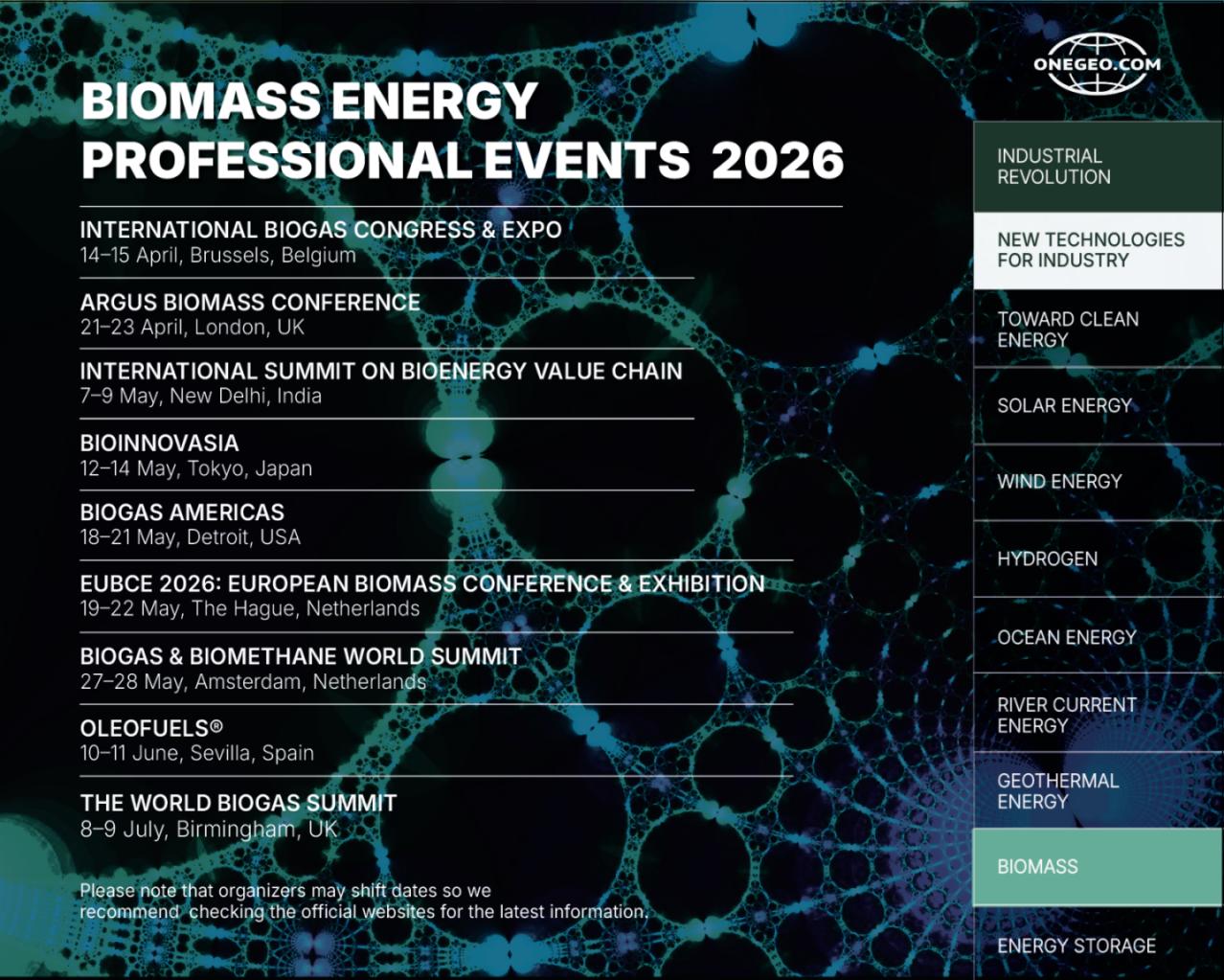
Biomass stands as a versatile energy source derived from organic materials such as agricultural residues, wood waste, food processing by-products, and wastewater sludge. It is currently one of the world’s largest clean energy sources and accounts for around 10% of global primary energy supply, with projections suggesting this share could double by 2050. Biomass can be converted into a wide range of energy carriers, including solid fuels, biofuels like ethanol and biodiesel, and gaseous fuels such as biogas and hydrogen, supporting decarbonization across multiple sectors.
Biomass energy plays a crucial role in reducing environmental impacts through waste utilization and resource efficiency. Technologies such as direct combustion, gasification, pyrolysis, and anaerobic digestion enable the conversion of organic waste into energy, helping to limit methane emissions, which have a significantly stronger greenhouse effect than CO₂. At the same time, sustainable biomass development depends on feedstock availability, efficient conversion processes, and environmental management to address challenges such as emissions, land use, and ecosystem impacts.
In the section “Biomass Energy” on ONEGEO.COM Global Digital Platform, you can explore the potential of biomass as one of the world’s major energy resources, its role in global energy supply, and its expected growth in the coming decades. The section provides detailed insights into biomass feedstocks, conversion technologies such as combustion, gasification, and anaerobic digestion, as well as the production of solid, liquid, and gaseous fuels. It also highlights environmental aspects, including the role of bioenergy in reducing methane emissions through waste recycling, alongside key challenges, economic factors, and global initiatives shaping the future of the biomass sector.
Please note that organizers may shift dates of the announced professional events, so we recommend checking the official websites for the latest information.